

Soil Remediation
ETC provides complete soil remediation solutions for hydrocarbon and
metal contamination. Our approach combines detailed assessment,
excavation, and treatment through bioremediation or soil washing under
strict national and international standard.
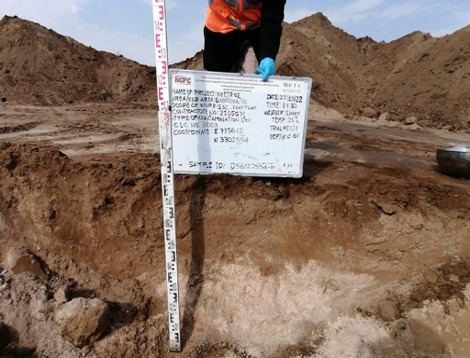
Site Characterization & Sampling
-Drilling & Logging – Identifies contaminated layers. -Sampling & Analysis – Tests for hydrocarbons, metals, and key parameters.
-Field Testing – Rapid on-site hydrocarbon checks.
-RBCA – Sets cleanup targets based on risk level.
-Reporting – QA/QC documentation to international standards.
Site Preparation
Covers all front-end field work required before treatment begins. Includes
excavation and removal of contaminated soils from defined impact zones, controlled transport using lined/sealed trucks, and delivery to ETC treatment facilities. Also include screening, debris removal, crushing, and homogenization to produce uniform material ready for bioremediation or soil-washing processes.
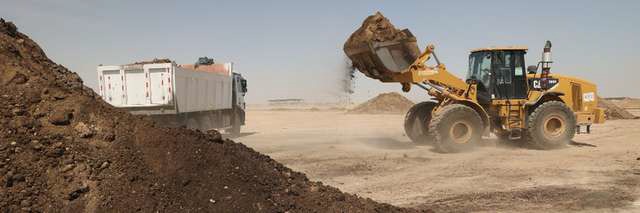
Excavation & Transportation (E&T)
-Excavation of contaminated soils from identified impact zones.
-Transportation using lined, sealed trucks with strict spill-prevention measures.
-Delivery of soil to ETC treatment facilities (bioremediation pads or soil washing systems), depending on contamination levels.
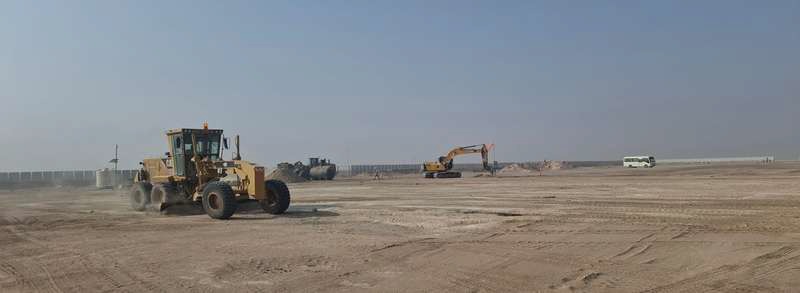
Screening, Crushing & Homogenization
-Removal of oversized debris and non-soil materials.
-Crushing and pulverizing to achieve uniform particle size.
-Homogenization improves soil consistency and enhances treatment efficiency.
Soil Remedial Technologies
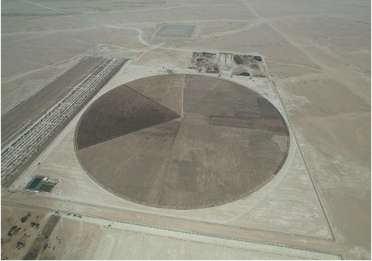
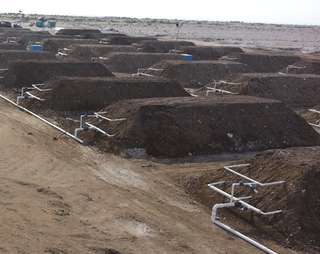
Bioremediation – Landfarming & Windrows (Low–Medium TPH Soils: ≥1–6%)
-Land farming (LF): Soils spread across engineered pads, tilled, irrigated, and amended with nutrients and inoculum. Central pivot and subsurface irrigation systems
-Windrows (WRs): Soils heaped into rows, turned mechanically, irrigated, and aerated to stimulate microbial activity.
–Lagoons: HDPE-lined lagoons serve as bioreactors for microbial inoculum and as storage for water.
Bio Cell Method
An engineered bioreactor approach where soils are contained in modular lined
cells with controlled moisture, nutrients, and aeration.
-Accelerated biodegradation compared to open systems.
-Ideal for small- to medium-footprint projects.
-Enhanced control over leachate and emissions.
Soil Washing Systems (High TPH Soils & Heavy Metals)
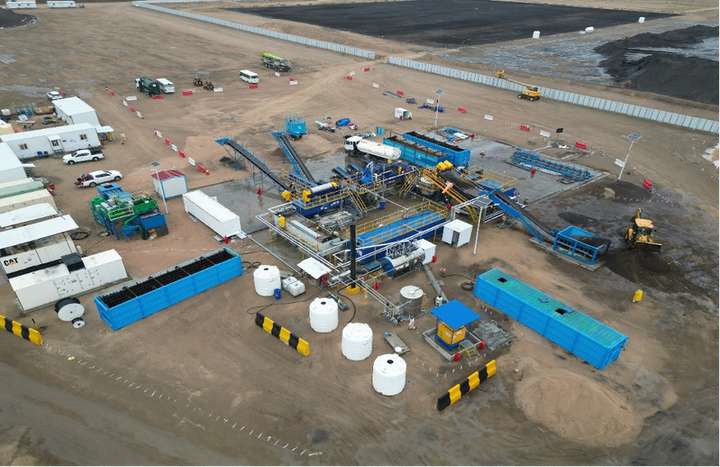
ETC’s soil washing systems treat heavily contaminated and metal-impacted soils using mechanical and chemical separation. The process efficiently removes hydrocarbons and stabilizes metals while recycling most of the process water.
Key Features
–Hydrocarbon Separation – Attrition scrubbing and hydrocyclones isolate clean
soil fractions.
–Heavy Metal Treatment – Specialized washing and stabilization immobilize
metals.
–Chemical Enhancement – Surfactants and additives boost recovery efficiency.
–Water Recycling – Integrated DAF and clarifiers allow up to 80% reuse.
–High Capacity – Handles up to 200 tons of soil and sludge per day
Underground Soil and Formation in-situ treatment
Nitrogen Gas Injection
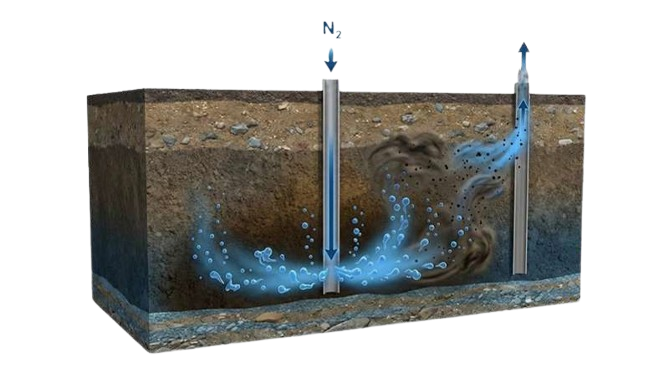
ETC’s nitrogen-based subsurface injection technology accelerates the removal of volatile contaminants while stabilizing site conditions. By displacing oxygen and mobilizing trapped vapors, the system boosts SVE performance, protects infrastructure, and maintains geochemical balance—all with an inert, non reactive gas
Key Benefits
-Clean Chemistry – Pure N₂ delivers contaminant stripping with no toxic byproducts.
-Operational Safety – Oxygen-free stream eliminates combustion and explosion risks.
–Accelerated Recovery – Enhances vapor movement and boosts overall remediation rates.
-Stable Subsurface Conditions – Limits corrosion, microbial surges, and heavy metal mobilization.
-Broad Application Window – Effective in shallow and deep formations across
hydrocarbon, VOC, and petrochemical sites.
–High Throughput – Injection capacity up to 4,500 SCFM (6.5 million SCFD).
Soil Vapor Extraction (SVE) Systems
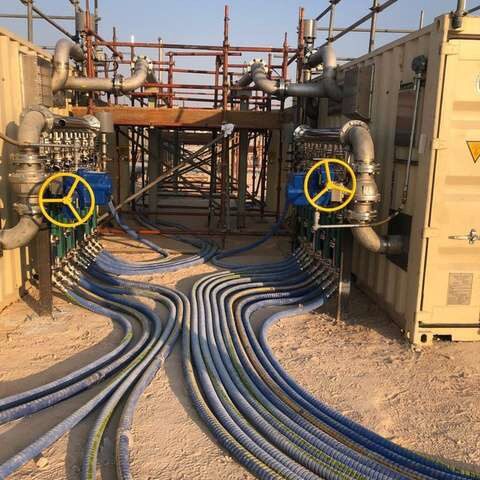
ETC’s Soil Vapor Extraction (SVE) systems are engineered to safely and efficiently remove hydrocarbon and VOC vapors from the vadose zone under complex site conditions. Our optionally modular, formation-driven design integrates real-time gas safety monitoring and high-capacity extraction to maximize mass removal while maintaining operation well below explosion limits.
Key Benefits
Formation-driven subsurface design improves cleanup and well placement
Mudlogging and gas monitoring enhance drilling safety and reduce risk
Integrated gas safety system monitors LEL, CH₄, O₂, H₂S, and VOCs
Automated alarms and shutdown for safety control
Engineered air dilution keeps vapor levels within safe limits
Modular SVE units operate in parallel for large remediation areas
High total extraction capacity of 4,600 SCFM
Continuous performance monitoring supports optimization and compliance
Provides reliable data for regulatory reporting